
Best Argentina Travel Guide (By a Local)

Here are some recommendations and tips for travel to Argentina, one of the most beautiful countries in the world. Written by Argentines!
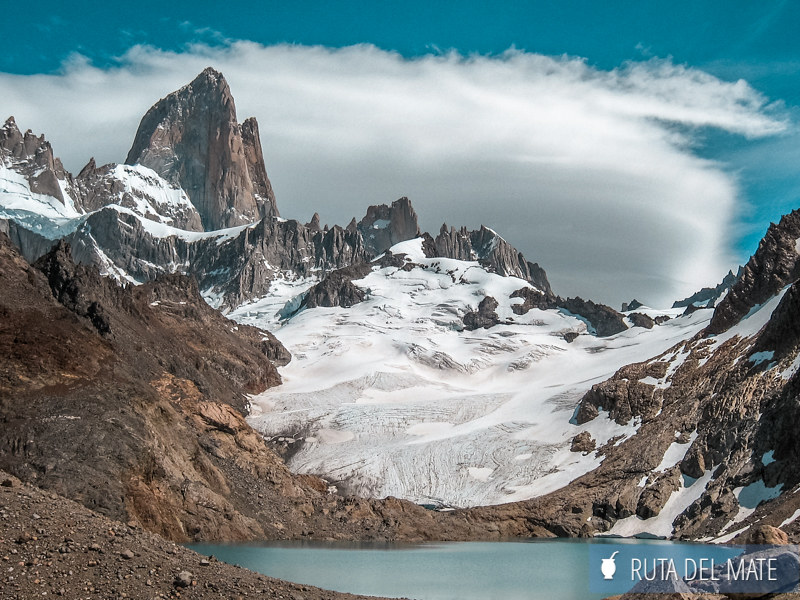
From Patagonia, through the hills of the northwest, the mountain ranges in the center of the country, the waterfalls and the entire beach area facing the Atlantic Ocean, the diversity of landscapes is incredible.
El Calafate with its glaciers, Ushuaia and the end of the world, the imposing Iguazu Falls, Mendoza and the mountain range and the Northeast of Argentina, are some of the many places to visit in Argentina.
We’ve written these tips for travelling to Argentina based on living in the country for more than 20 years and then visiting as a resident in Spain, so here you’ll find all the info!
Suggested itinerary for travel in Argentina
This suggested itinerary is based on our experience traveling the country on several occasions. There are many things to visit if you are travel to Argentina:
- If you don’t have many days, the ideal is to focus on the main tourist destinations: Buenos Aires and surroundings, El Calafate, Ushuaia and Iguazu Falls. This will take about two weeks.
- If you have three weeks, you can add a week in the mountain range area near Bariloche, or a tour of the Argentine Northwest in the provinces of Salta and Jujuy or Mendoza and surroundings.
As you can see, there are plenty of places to visit in the country. In addition to those mentioned above, it is also worth visiting the Valle de la Luna in San Juan, the sierras of Córdoba and San Luis, the Valdes peninsula near Puerto Madryn and the Iberá marshes in Corrientes.
Also from the wildlife point of view, there is a lot of diversity to see, such as penguins, sea lions and whales in Patagonia.

Requirements to travel to Argentina as a tourist
- Citizens of more than 100 countries around the world, including most countries in the Americas and Europe, do not need visas to enter Argentina as tourists. The maximum stay is 90 days and you must enter with a valid passport.
- Citizens of some South American countries (Chile, Uruguay, Paraguay, Brazil, Peru, Ecuador, Colombia, Venezuela and Bolivia) can enter the country with their national identity card (as long as they come from their countries).
Extension: If you wish to stay in the country for a further 90 days, the request must be made in person at one of the offices of the National Directorate of Migration and must be made between 60 and 10 days before the expiry of the original period.
Although it is not a requirement to enter Argentina and no one will ask for it, it is always recommended, for peace of mind, to travel with medical insurance.
Citizens of Canada have to pay the so-called Reciprocity Fee, which is USD 100. It must be paid online at least five days before departure from the country of origin. The reciprocity fee is valid for 10 years and for multiple entries, or until one month before the expiry date of the passport.
The electronic receipt must be shown to the airline when checking in and then presented to the immigration authorities upon arrival in Argentina. To process and pay the reciprocity fee, you must enter the official Migration website.
- As of June 2025, it is compulsory to take out travel insurance to enter Argentina as a tourist, covering medical assistance and repatriation.
Best time to travel to Argentina
Being a very large country, the climate is different in the south, north and center. Depending on the time of the year you will be traveling to Argentina, you should bring both warm and lighter clothing.
If you are going to visit Patagonia, the best time to travel is from November to March, when temperatures during the day are pleasant, although at night they drop, especially in the mountain range area. In winter it is very cold, but this is the season when people go to the ski resorts in the Andes Mountains.
If you are going to visit Iguazu Falls or the Argentine Northwest, the best time is winter, from May to October, when the heat is not suffocating. It should be taken into account that during the Argentinean summer, rainfall in the Northwest produces precipitations that flood the roads.
Buenos Aires and the central area of the country can be visited all year round. Winters are not so cold and summers are not so hot, although the summer season can be used to visit some of the beaches near Buenos Aires such as Pinamar or Mar del Plata, and even enjoy the wild beaches of Patagonia such as Puerto Madryn.

Language spoken in Argentina
The official language is Spanish, but many know English, especially if you go to tourist areas.
It should be noted that it differs from the “Spanish of Spain ” (and other parts of Latin America), both in tone and in the use of certain words.
The use of “voseo” stands out, replacing “tú” with “vos”, and changing verb conjugations: “vos tenés” instead of “tú tienes”. In addition, “ll” and “y” are pronounced with a sound similar to the “sh” in English, as in “playa” and “lluvia”.
In Argentina, there is also lunfardo, a slang that originated in Buenos Aires at the end of the 19th century. It was used among delinquents and then became popular thanks to the tango, to the point of becoming everyday. Some typical expressions are “laburo” (work), “mina” (woman), “pibe” (boy) and “mango” (money). Also, new words are emerging and becoming popular all the time.
Exchange money in Argentina (pesos argentinos in 2025)
What currency does Argentina have? The currency is the Argentine peso.
The Argentine peso is stabilising month by month, as annual inflation, although still high, is falling (currently 55.9% per annum).
Since 14 April 2025, the official exchange rate (1 dollar = 1,110 pesos; 1 euro = 1,250 pesos as of April 2025) has been operating almost normally. There is still a slightly more convenient parallel market for exchanging dollars or euros (1 dollar= 1,220 pesos; 1 euro= 1,375 pesos as of April 2025), although it is expected that when the restrictions on the purchase of dollars for Argentines are completely lifted, this black market will disappear or its rate will be similar to the official exchange rate.
At present, any expenditure made with a foreign credit card is quoted at the official dollar rate. It is recommended to check the official website of Banco Nación Argentina to have an idea of the current exchange rate.
Budget for travel to Argentina per person per day
- Low Budget: ≅ 35/55 USD
- Medium: ≅ 80/150 USD
- Deluxe: +250 USD
These budgets for travel to Argentina can change from year to year due to high inflation and economic uncertainty in the country.
This average price can vary depending on the region to be travelled, the high prices in Patagonia are not the same as in the northwest of Argentina, where everything can be half the price of what it is in the south of the country.
Is it safe to travel to Argentina?
There is a lot of talk about insecurity in Argentina and we as locals can tell you that depending on where you are you have to walk carefully on the street, especially when it starts to get dark.
In general, large cities are the most conflictive. Buenos Aires, Rosario, Córdoba City, Mar del Plata, Mendoza City suffer insecurity incidents every day, although if you move around crowded places and during the day probably nothing will happen to you.
The outlook is different if you travel to the tourist places in the interior of the country. Traveling in Patagonia Argentina is very safe, there are no major incidents of insecurity and you can walk peacefully during the day and night in the cities.
The northwest of the country is also safe, just be careful at night in San Miguel de Tucumán. In Mendoza, only the city suffers some acts of insecurity, the rest of the province is safe.
In general and as locals, we can give you the following recommendations regarding safety in Argentina if you visit the big cities, especially Buenos Aires:
- Walk in crowded places and try to avoid going out after midnight.
- Do not wear jewelry, high-end watches, cameras or laptops in plain sight at night.
- If you are dining out, try to return to your accommodation by cab.
Transportation for travel in Argentina
To travel in Argentina there are:
- Airplanes: very useful to communicate from Buenos Aires with the north and south of the country due to the great distances that separate the cities. Thanks to the boom of low cost airlines in Argentina, there is now greater connectivity with tourist destinations without the need to go through Buenos Aires. The flag carrier and the one with the highest frequency of flights within the country is Aerolíneas Argentinas, but it also operates low cost airlines such as Flybondi or Jetsmart.
- Buses: there are many companies, but we recommend it only for short trips, since a trip from Buenos Aires to Patagonia can take almost a whole day and nowadays there is not much difference in price with respect to the airplane. The bus seats are very comfortable, so you will travel in total comfort.
- Train: practically non-existent to travel around the country. From Buenos Aires there are only trains to Mar del Plata, Rosario and Córdoba, but very infrequently and not very comfortably.
- Ferries: ferries are used to cross the Río de la Plata and connect the city of Buenos Aires with the Uruguayan cities of Colonia or Montevideo. There are three companies that make the trip, the best known being Buquebus.
- Car rental: it is a good option to move within a region, such as the seven lakes area in Patagonia, the Argentine Northwest or the surroundings of Buenos Aires. Due to the distances, it is not advisable to travel the country by car if you do not have many days, the distances are enormous and you will lose time on the road.
Lodging in Argentina
Lodging prices vary according to the area, with the most expensive places to stay being Patagonia and the capital Buenos Aires.
- Hotels and hostels: these are the most frequented by tourists. There are many options for all budgets. 3 star hotel from 40 to 100 USD a double room/ hostel from 15-25 USD per bed in a shared room.
We use Booking to make our hotel reservations, we are a Genius Client and this gives us access to many discounts and very juicy benefits. Just in case a better offer (better price and better location) comes along later, we usually book with free early cancellation.
- Apartments: since we travel with little Benjamin, we only book apartments for more independence. Average price apartments – 70-120 USD
- Cabins: these lodgings built with wood are very typical in some places such as Patagonia or the sierras of Córdoba. Average price cabins – 50-80 USD.

What to eat in Argentina, traditional dishes
What do you eat in Argentina? In our country we are fans of meat and pasta. Due to the large number of Italian immigrants who settled in the country, pasta is always present among the local dishes.
Although the tradition of the country is that the asado, with different cuts of meat and offal, is undoubtedly the favorite to eat with the family.
Sweet treats also play an important role, with cakes and pastries sold in bakeries and cafeterias.
Let’s get to know the local dishes eaten in the country:
- Asado: one of Argentina’s favorite foods. Asado is basically what in Spain is called barbacoa. It is meat cooked over charcoal or firewood on a grill. It should be noted that meat cuts in Argentina are varied and the name is very different from what they are called in other countries. Thus, we have cuts such as strip roast, matambre, vacío, tapa de asado, peceto, among others.
- Dulce de Leche: the most common sweet in Argentina, you will see it everywhere. It is a mixture of milk and sugar cooked over a fire for a long time. The result is a thick and very sweet mixture, which Argentines use as a filling for cakes, alfajores, or to eat directly with toast or cookies.
- Mate: the classic infusion during breakfast or snack. Yerba mate is produced in the northeast of the country. A bombilla and the mate itself, which contains the yerba mate, are used to drink the mate. Hot water is poured in and ingested through the bulb. The taste is a touch bitter, but it is a must in any Argentinean home.
- Fernet con cola: although its origin is Italian, it is a very popular alcoholic beverage in the country, especially in the province of Córdoba. It has a high alcohol content, around 40 degrees, and its flavor is a touch bitter as it is a mixture of herbs. Normally to prepare the drink is served 1/3 fernet and 2/3 cola.
- Argentine wines: the wines are famous in the country, being the producing region the mountain range area, mainly the provinces of Mendoza, San Juan, La Rioja, Salta and Neuquén. If you visit these provinces you will find a large number of wineries. The varieties are similar to those found in France, not by denomination of origin as in Spain. Merlot, Syrah, Cabernet Sauvignon and Bonarda are the most common.
- Empanadas: very famous especially in the northwest of the country, especially in the province of Tucumán. Meat empanadas are the best known, although there are also different varieties such as humita.
- Regional foods: certain regions of the country have their own gastronomy, mainly the northwestern area. Here you can eat tamales, humitas and locro. In Patagonia, it is very common to eat Patagonian lamb or trout in the mountainous area of the lakes.
- Alfajores: another of the typical local sweets. It is a double dough cover, which can have chocolate or dulce de leche in the middle. In turn, it may or may not be dipped in chocolate. You will find a wide variety of brands in any store (called kiosko) in the country.

Curiosities of Argentina
- Population: Argentina has about 45 million inhabitants, but their distribution in the country is not homogeneous. More than 30% of the population is concentrated between the capital city of Buenos Aires and the so-called Greater Buenos Aires, which includes the surrounding areas. In all of Patagonia, on the other hand, less than two million people live in an enormous territory.
- Gauchos: one of the traditional characters of the Pampa Húmeda area (interior of the province of Buenos Aires, south of Santa Fe and Córdoba). The gaucho was a country character with a typical dress, usually riding a horse. There are many legends about this character, and even the book Martín Fierro is based on him. Today, gauchos can still be seen in small towns in the interior of the province of Buenos Aires, but more modernized than in the past.
- Mate: the usual infusion in any Argentinean table, regardless of the time of the year. It is usually eaten for breakfast or a snack and is a reason for family or friends to get together.
- Sweet things: one of the characteristics of the country is the great variety of sweets and sweet products. There are alfajores, candies, nougats and countless cakes.
- Argentinian-style Italian food: another Argentinian tradition that has been imported by Italian immigrants is pasta. Normally on Sundays at noon, a family gathering takes place to eat homemade pasta or pasta bought from a pasta factory.
- The Argentine ego: there is a lot of talk about this in the world, and they are partly right. The Argentinean often comes off as arrogant, arrogant and know-it-all. Here it is not necessary to generalize, normally the porteños (that’s the name given to the inhabitants of Buenos Aires) are the ones who are most famous for their ego, but you will always find humble people in the street.
- Customs of the indigenous population: it is well known that the Argentine territory was populated by indigenous people before the Spanish conquest. Although they were massacred centuries after centuries, there are still indigenous people in the country, especially in the northwest of Argentina, the provinces of Chaco and Formosa and the Mapuche in the south of the country. As for festivities and traditional foods of the indigenous people, traveling through the northwest of the country is where you will see the most. For example, the feast of the Pachamama (Mother Earth) is very important in the provinces of Salta and Jujuy.
- Tango: one of the best shows in the country, mainly in the city of Buenos Aires, in neighborhoods such as San Telmo or La Boca. Originally from the cabarets, there are many “milongas” and show places in Buenos Aires to witness this wonderful dance and music that is still passed down from generation to generation.

Did you like our guide to travel to Argentina? You can leave a comment and share it on your social networks.
Discounts and useful resources to save on your trip
- TRAVEL INSURANCE:
- INFORM YOURSELF: Travel Insurance Comparison 2025
- ACCOMMODATION – Hotels with Booking
- RENT A CAR – Rent a car with DiscoverCars
- TRANSPORT EN EUROPE – Train, Bus and Ferry tickets for Europe with OMIO
- TRANSPORT EN ASIA – Passages through Asia with 12Go
- ACTIVITIES AND TOURS IN YOUR LANGUAGE
- STAY CONNECTED – Internet around the World! Your eSim with HolaFly (5% discount) 📱