
The Best Things to Do in Buenos Aires in 4 Days

Discover the essential things to do in Buenos Aires in 4 days, the city of fury, especially if you have a couple of days to explore it.
Any article you make about must-see places to visit in Buenos Aires in 4 days will fall short, because the Argentine capital has a lot to offer according to your tastes: many museums, buildings with spectacular architecture, the whole soccer culture, unique neighborhoods, shopping places, excursions to do in the surroundings…
But I will try to orient it to someone who has little time, three to four days, or who has only one opportunity to visit the city and wants to see as much of it as possible. Each of these points that we will propose will be accompanied by more complete articles for further information.
I also recommend that you check out our article with tips for visiting Buenos Aires where you will find tips on safety (or insecurity), how to get around, what to keep in mind, etc.
A little about Buenos Aires
To place it in history, it is worth mentioning that in its first foundation (1536) it was given the name of Nuestra Señora del Buen Ayre in honor of the Patron Saint of the Navigators of the Triana neighborhood in Seville, to whose brotherhood Pedro de Mendoza belonged.
Today, Buenos Aires is known by different nicknames. Locally it is called Baires, CABA or Capital Federal… but it is also affectionately known as the Paris of the South, the Queen of the Plata and, why not, the City of Rage (this nickname comes from a Soda Stereo song).
Another thing to clarify is that Buenos Aires is an autonomous city, not belonging to any province, and then its metropolitan area formed by about 40 municipalities belongs to the province of the same name. The city alone has about 3 million inhabitants and, if we add the surrounding population in Greater Buenos Aires, it has 14 to 16 million inhabitants, which is one third of the country’s total population.
Due to its strategic location on the banks of the great Río de la Plata, Buenos Aires soon became one of the most important ports in America and the main connection to Europe. It received more and more European immigrants, at some times mostly Spanish (whose descendants are those who achieved independence from Spain) and then many Italians. But there were also immigration flows in which many French, Swiss, Germans, Syrians, Lebanese and Jews arrived.
That is why Buenos Aires is a cosmopolitan city that usually welcomes foreigners and where everyone has put a little bit of themselves to build this great eclectic city.
Is it safe to travel to Buenos Aires?
There is a lot of talk about whether it is safe to travel to Argentina, especially to the capital Buenos Aires. We have been living in Buenos Aires for more than 7 years and we are Argentinians ourselves, so we can give you first-hand advice.
As a general rule, if you move around during the day in the tourist areas mentioned below, there are no major problems. In these places there are usually a lot of police on the lookout.
However, try not to be ostentatious in what you wear, i.e. valuable watches, jewellery and anything else that might be ostentatious should be left at the hotel. You can always carry your camera and mobile phone with you, paying attention.
To get around Buenos Aires as a tourist during the day, you can easily use the metro, called subte here. Other means of public transport are not recommended, with the exception of the Mitre train line on the branch from Retiro to Tigre. Getting around by taxi, excursion or private transport is always the best option, and in Argentina it is cheap.
At night the situation changes, and you will have to travel by taxi or private transport from one point to another. You can walk at night in crowded areas such as the bars and restaurants of Recoleta or Palermo, but you should avoid walking at night in other places.
Is 4 days enough to get to know Buenos Aires?
The reality is that it depends. The city is very big and has many attractions. If what you want is to know some of its history, visit the most emblematic neighbourhoods such as Caminito, San Telmo, Recoleta and the Microcentro, and see a tango show, you will surely be able to do it.
You can even visit something in the surrounding area such as the Delta del Tigre.
If you already want to visit an estancia to enjoy a day in the countryside savouring a barbecue, you will have to add an extra day.
Itinerary on things to do in Buenos Aires in 4 days
This suggested itinerary of places to see in Buenos Aires in 4 days is ideal for planning your visit to the Argentine capital.
- Day 1: La Boca and San Telmo
- Day 2: Microcentro, Obelisco and Puerto Madero
- Day 3: Recoleta and Palermo
- Day 4: other neighborhoods of Buenos Aires such as Barracas or Boedo, or an excursion to get away to somewhere close to the city such as the Tigre Delta.
🔝 Check out this article about getaways to do from Buenos Aires in one weekend.
Map of essential things to do in Buenos Aires in 4 days
These must-see places in Buenos Aires in 4 days have been chosen so that you won’t miss anything in the city if you are traveling for the first time and have little time to visit it.
It is clear that Buenos Aires has so much more to see and do, it is almost unmanageable.
Day 1: La Boca and San Telmo
Things to do in La Boca neighbourhood, one of the attractions to see in Buenos Aires in 4 day
As anyone would think, its name does not derive from the fact that the stadium of the Boca Juniors football team is located there, but rather from the fact that it is at the mouth of the Riachuelo in the Río de la Plata.
As it was the area where most of the ships entered, at the end of the 19th century many Italian immigrants settled there, mainly Genoese, who gave the neighbourhood its current appearance. They lived in tenements (tenement houses in Spain) whose walls were made of sheet metal and painted with the leftover paint from the ships. Normally one can of paint was not enough to paint a whole house, so the houses were usually painted in different colours.
- Caminito: it is a street or passage in the neighbourhood of La Boca, on the sides of which you can see the colourful tenement houses. Since the 50’s, due to the popularity it acquired thanks to a tango and the initiative of some of its neighbours, among which was Benito Quinquela Martin, this street is a pedestrian street and an open-air museum.
- Nicolás Avellaneda Ferry Bridge: there are very few bridges of this type in the world. It was in operation from 1914 to 1960 and since 2017 it has been repaired, but it is not yet open to tourism.
- Boca Juniors Stadium: it is located about 400 metres from Caminito. It is the stadium of one of the most important and popular football teams in Argentina, the Club Atlético Boca Juniors, also known as the Bombonera. Inside, it is worth visiting the Museo de la Pasión Boquense and, if possible, watching a football match.
🔝Take a look at our article on things to do in La Boca which includes more places than the ones mentioned above and more practical information for planning your trip to Buenos Aires.
things to do in San Telmo
Sal Telmo is one of the first neighbourhoods of Buenos Aires and that is why there is a special air about it. It smells of colonial architecture, cobbled streets and squares full of everyday life. You are sure to witness a tango street show, as tango music plays in every corner.
📷 But if you want to go somewhere, we recommend the tango show at the Astor Piazzolla theatre.
Some places you can’t miss in the San Telmo neighbourhood:
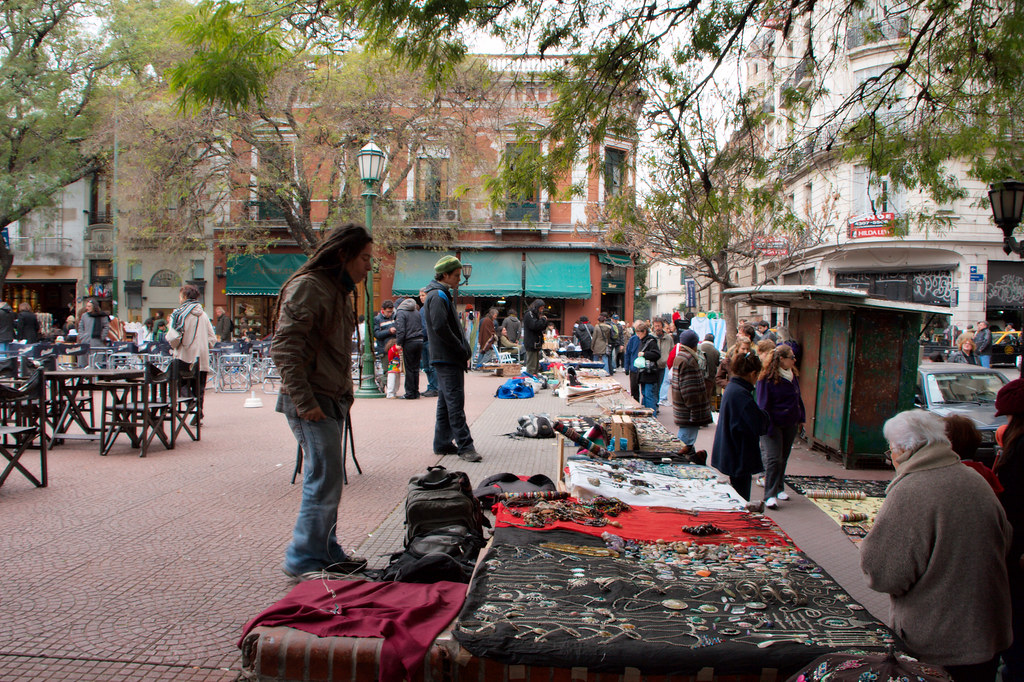
- Plaza Dorrego, markets and fairs: it is the heart and meeting point for those who want to visit the neighbourhood of San Telmo. It is also surrounded by bars, cafes and restaurants of the most traditional kind, with their tables in the square and surrounded by historic buildings that maintain their original style.
- Feria de San Telmo: held on Sunday mornings, this is a must-see in Buenos Aires.
- San Pedro Telmo Church: Built in 1734, it is one of the oldest churches in Argentina and is one block from Plaza Dorrego.
- Lezama Park and National Historical Museum: Ideal for strolling under the trees and enjoying the open air. Lezama Park was designed by the landscape architect Carlos Thays. It houses the National Historical Museum and in front of it a Russian Orthodox Church.
- Casa Mínima: it is located in Pasaje Lorenzo 380 and it is a house of little more than 2 metres wide and 13 metres deep. It is the narrowest in the city and I would bet it is also the smallest.
- Paseo de la Historieta and the Museo del Humor: starting at a bench in the street where Mafalda sits, you can visit other spots in the San Telmo neighbourhood where you can find some of the most beloved characters of the Argentinean comic strip, such as Isidoro Cañones, Clemente, Larguirucho and Super Hijitus.
🔝Take a look at our article on things to do in San Telmo, which includes more places than the ones mentioned above and more practical information for planning your trip to Buenos Aires.
Day 2: Microcentro, Obelisco and Puerto Madero
Things to do in the Plaza de Mayo area in Microcentro
This is the heart of the city of Buenos Aires, where you will find the main historical buildings to see.
- Plaza de Mayo: it is a fairly large square with the Pyramid of May in the center, symbol of the founding of the city and later independence. It is surrounded by important buildings.
- Casa Rosada: it is the seat of the Executive Power of Argentina and you can take guided tours inside. For this, reservations must be made well in advance.
- Cathedral of Buenos Aires: of neoclassical style, it has nothing to do with the majestic European cathedrals, but it is worth a visit inside and especially to admire the details of its High Altar. Inside is the Pope Francis I Museum.
📷 Jorge Bergoglio was from Buenos Aires and has lived there most of his life. There are tours that take you to the places that marked his path to becoming the 266th Pope. Check Pope Francis tour and book.
- Cabildo of Buenos Aires: it used to be a larger building where the Viceroyalty was governed. Today it houses a historical museum that will tell you about the before and after of the revolution that triggered Argentina’s independence.
- Manzana de las Luces: in this historic block there are not only buildings dating from the eighteenth century but a curious network of tunnels and subway passages of that time, built by the Jesuits, which communicated with several buildings in the area.
📷 Do you have a stopover in Buenos Aires and want to do some sightseeing before your next flight? Check out this tour and reserve your place
🔝 Take a look at our complete article of things to do in Microcentro. It includes more places than those mentioned above and more information that can be very useful in planning your trip to Buenos Aires.

Obelisco area
The area around the Obelisk is one of the busiest in the city and, as a symbol, is one of the main places to see in Buenos Aires.
- Obelisk: historical monument built in 1936 on the occasion of the fourth centenary of the first foundation of Buenos Aires by Pedro de Mendoza.
- Avenida 9 de Julio: it is one of the main avenues in Buenos Aires and with its 140 meters it is the widest in the world. It runs only 3 kilometers from north to south and is one of the busiest in the city.
- Corrientes Street: or “the street that never sleeps”, due to its countless renowned theaters, bars and restaurants.
- Teatro Colón: this beautiful building houses the Buenos Aires Opera House, which, due to its size, acoustics and trajectory, has come to be considered the best opera house in the world.
More complete information about the Obelisco area can be found in our article of things to do in Microcentro which, as mentioned above, includes more places than the ones mentioned above.

Things to do in Puerto Madero
Puerto Madero extends along a system of intercommunicating levees, with swing bridges and two access channels, one to the north and the other to the south. And it is an area of offices and residences quite a top must see in Buenos Aires in 4 days.
- Stroll through the docks: you can see the yellow cranes and what used to be warehouses and storage silos and today have been converted into offices and residences.
- Puente de la Mujer: it was the first of Spanish architect Calatrava’s designs in Latin America. It is a white, swiveling, braced bridge that has been dubbed the Women’s Bridge.
- Sarmiento Frigate: It is a training ship built at the end of the 19th century that has circumnavigated the world on peacekeeping missions. It is possible to visit the museum inside.
- Costanera Sur Ecological Reserve: it is one of the largest urban reserves in Latin America with more than 2,000 species of birds, mammals, plants and trees.
🔝 Take a look at our article of things to do in Puerto Madero which includes more places than those mentioned and more practical information for planning your trip to Buenos Aires.

things to do in the Congreso and Avenida de Mayo area
The Avenida de Mayo starts at the Plaza de Mayo and reaches the Plaza de Congreso, where it joins the eternal Avenida Rivadavia (the longest avenue in Argentina).
- Avenida de Mayo: although beautiful buildings can be found all over Buenos Aires, it is on this avenue where the most impressive ones can be found and with which many visitors do not know if they are in Paris or Madrid. The architecture of Buenos Aires is one of its attractions and can be seen when walking along this avenue.
- Palace of the Congress of the Nation: it is one of the most imposing palaces of the capital, built at the beginning of the XX century. Free guided tours are available whenever the Senate is not in session.
- Plaza del Congreso: this is where the kilometer zero of the Argentine highways starting in Buenos Aires is located. It was also designed by Carlos Thays.
- Palacio Barolo: with its 100 meters high it has become the tallest building in Argentina and South America. It is an office building, but allows a visit to the highest part to admire the beautiful views of the city and the square.

Day 3: Recoleta and Palermo
Things to do in Recoleta neighbourhood
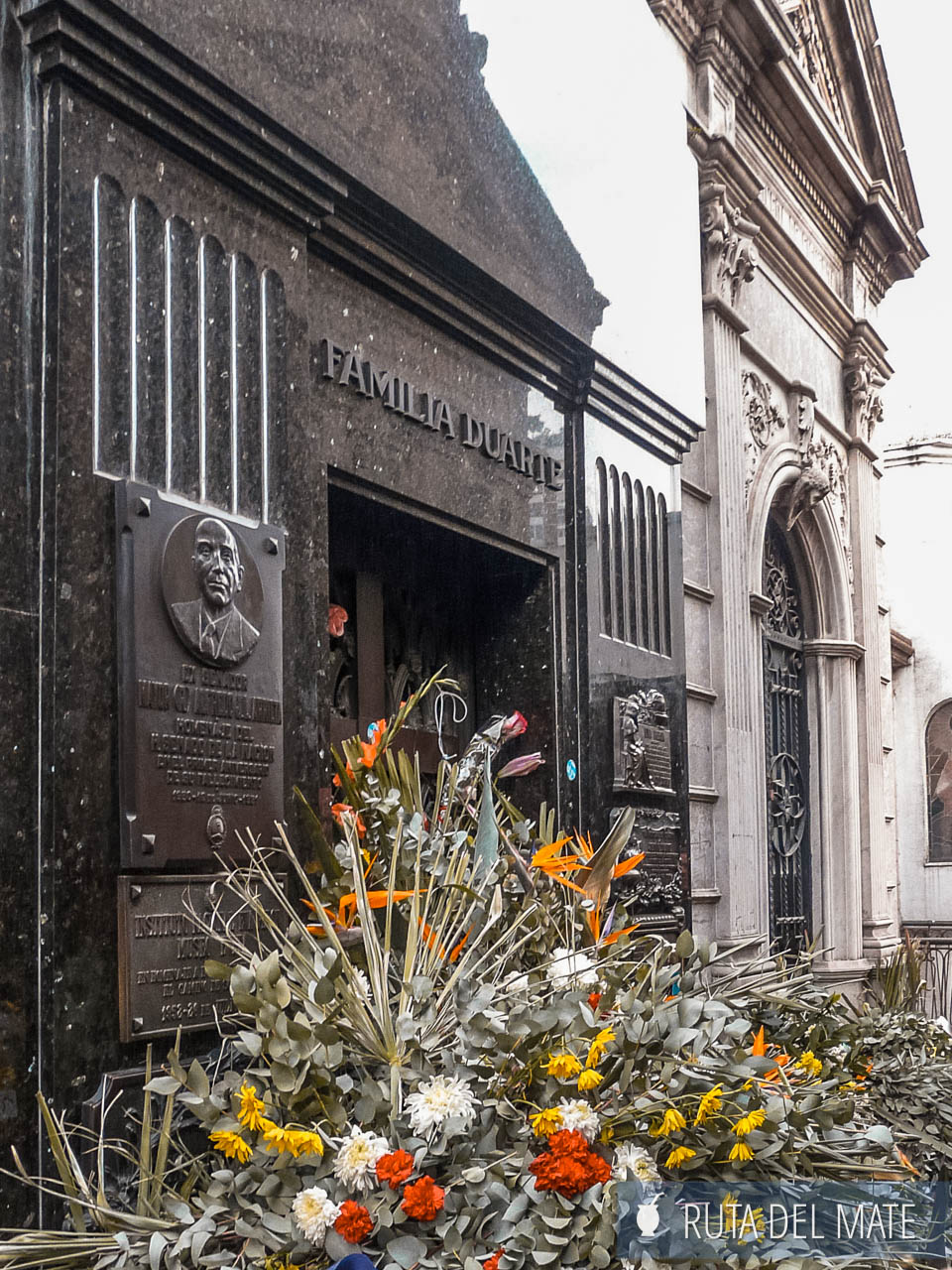
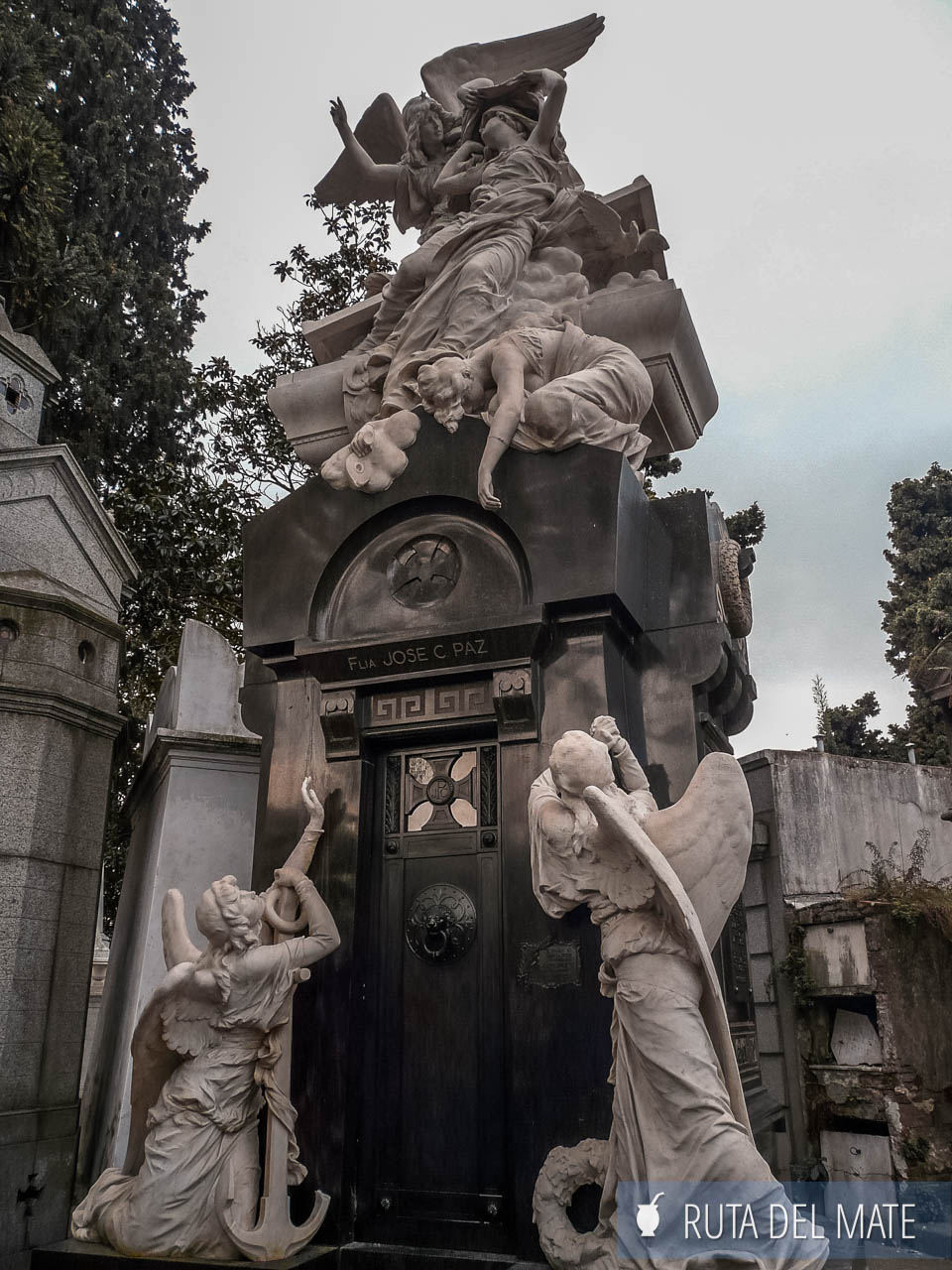
Let’s agree that traveling to Buenos Aires for tourism and visiting a cemetery is something that may sound strange at first. But the Recoleta Cemetery is a work of art in itself that you cannot miss if you are visiting Buenos Aires.
It is, since 1946, a National Historical Museum and almost 100 mausoleums inside have been declared National Historical Monuments.
- Recoleta Cemetery: In this cemetery rest the remains of Argentine aristocratic families, former presidents of the country and nationally renowned personalities. It looks like a mini-city, with its blocks, avenues, streets and traffic circles, and the mausoleums and pantheons feature a variety of spectacular architectural styles. One of the most visited mausoleums is that of Evita Perón.
- Historical Heritage Tree: This is a large gomero tree planted in 1781. Its branches reach 30 meters long.
- La Biela: it is one of the most traditional cafeterias in Buenos Aires and is located in front of the Recoleta Cemetery. It has a long history as it has been frequented by important personalities of Argentina.
- The surrounding squares: around the Recoleta Cemetery there are many green spaces, among which Plaza Francia or Plaza San Martín de Tours stand out. Weekends are its most frequented days, with stalls selling handicrafts and street performances.
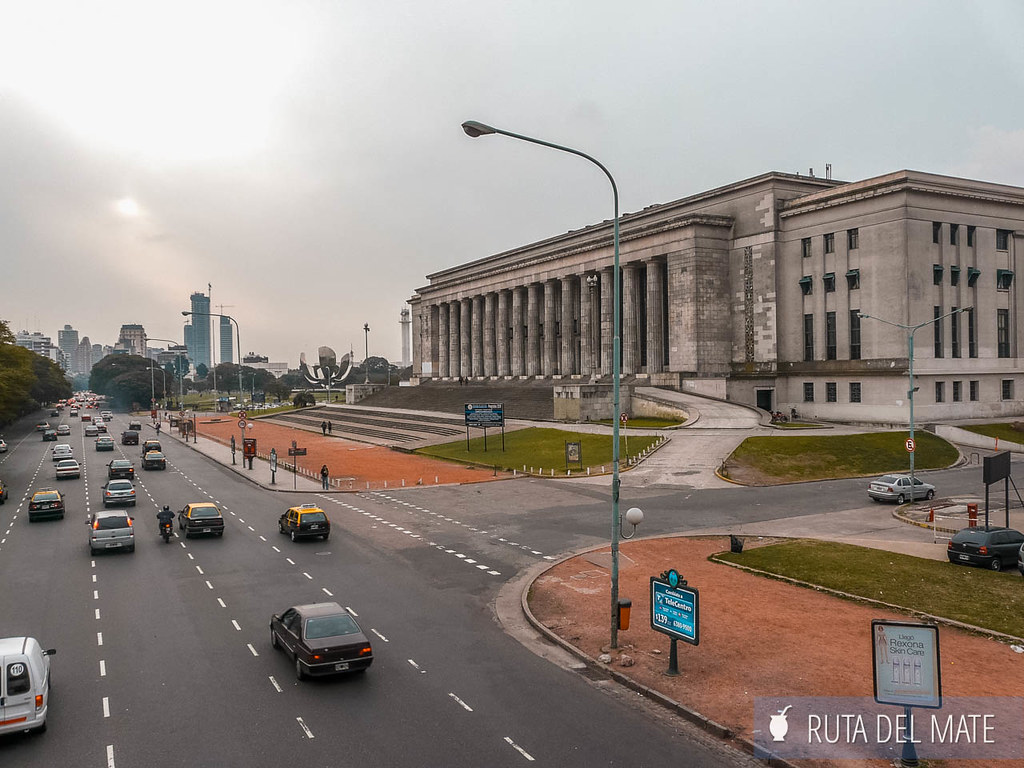
- The Buenos Aires Law School: it is a very photogenic and beautiful building to contemplate from the bridge that crosses Figueroa Alcorta Avenue. Many people go up to its steps to take creative photos. The Law School has operated in this building since 1949.
- Floralis Genérica: is the sculpture of a steel flower in the middle of a fountain. It has an electrical system that allows it to open in the morning and close at night.
- Museo de Bellas Artes de Buenos Aires: it houses an important collection of classic European art. Some of the artists on display include Rembrandt, Rubens, Renoir, Cézanne, El Greco, Rodin, Picasso, Goya, Monet and Van Gogh.
🔝 Take a look at our article of things to do in Recoleta which includes more places than those mentioned and more practical information for planning your trip to Buenos Aires.
Things to do in Palermo in Buenos Aires
Palermo has many divisions and once you learn one, another one appears. As time went by, Palermo Viejo, Hollywood and Soho were joined by Botánico (Green), Sensible, Vip, Glam and Harvard. Each name has a why and we won’t see them all now. But I will tell you what there is to see in this porteño neighborhood.
- Plaza Italia and Botanical Garden: it is in the vicinity of this square where the Carlos Thays Botanical Garden is located, which has many national and international plant species. Ideal for a stroll among the ponds and to cool off in the shade of the trees.
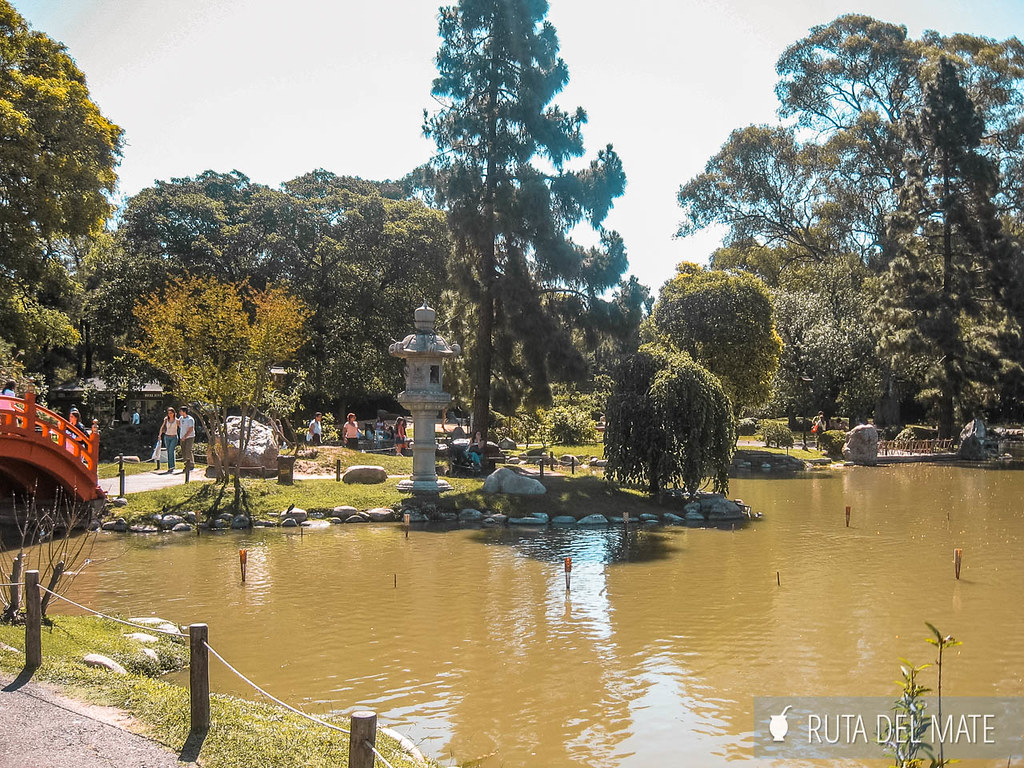
- Japanese Garden of Buenos Aires: it is the largest Japanese garden outside Japan. A very beautiful outdoor space, full of ponds, bridges and Asian monuments.
- Palermo Forest and the Rosedal: this is another of the great green spaces to see in Buenos Aires in which the landscaper Carlos Thays participated. And it is one of the most popular because when the weather is good, many people come to enjoy its lakes and the Rose Garden.
- Galileo Galilei Planetarium: it was inaugurated in 1967. The purpose of its exhibitions is to disseminate astronomy. It is possible to attend performances in which the sky is projected onto the dome. Many will enjoy the environment, because the surrounding park has a super green and manicured lawn ideal for a picnic.
- Museo de Arte Latinoamericano (Malba): is a modern art museum with works by Latin American artists from the 20th century onwards. It also hosts cultural events and even has a screening room for independent films.
- Plazoleta Julio Cortázar: around this small square named after one of the great Argentine writers, you will find what is known as Soho. It is an area where there are bars and restaurants everywhere.
- Armenian Square: since there is a large Armenian community living in the area. Like Plaza Cortázar, the surrounding area is full of bars and restaurants. On weekends and holidays there is an artisan fair.
Day 4: Retiro, other Buenos Aires neighbourhoods or nearby getaways
Things to do in the Retiro neighbourhood in Buenos Aires
- Plaza San Martín: it houses the moving Monument to the Fallen in Malvinas and the eternal flame. The trees in the park are hundreds of years old and there are also other monuments.
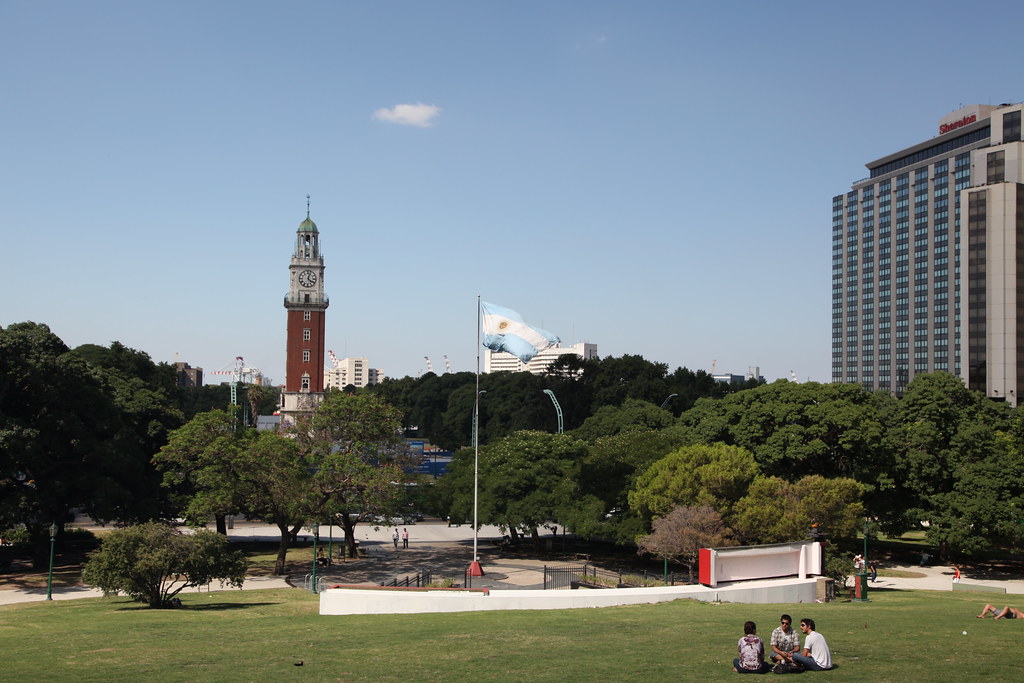
- Monumental Tower in the Plaza Fuerza Aerea Argentina: in the square in front of the San Martin. In the centre stands out a clock tower that the British government gave to Argentina in commemoration of the first centenary of the Independence.
- Kavanagh Building: it is an imposing residential building in front of San Martin Square. It also became the tallest in Latin America at 136 meters. It is one of the nicest to see if you are visiting Buenos Aires, although it is not possible to visit the inside (unless you know someone who lives there).
- Galerías Pacífico: it is a shopping mall that was created at the end of the 19th century as a replica of the Parisian store Le Bon Marché. It is one of the most visited shopping centers in the country.
Other neighborhoods with history in Buenos Aires
I can go on as long as I want about things to do in Buenos Aires in 4 days. There’s a lot to say, but I want you to stick with a few other places in particular in case you can spend more time in the city:
- Barracas: a porteño neighborhood full of urban art where the largest mural in Argentina can be found.
- Coghlan: another neighborhood of artists and factories converted into universities.
- Boedo: it is the tango neighborhood par excellence, super bohemian and residential.
Getaways to do from Buenos Aires
And also, if you want, you can visit other places from Buenos Aires, perfect getaways to learn a little more about the history, culture and traditions. There are many options to do in Buenos Aires in 4 days.
Among the options we recommend you to cross by ferry to the city of Colonia del Sacramento in Uruguay, or take a walk through the wonderful Delta del Tigre, where the Parana River flows into the Rio de la Plata, or live the tradition of the gauchos is an estancia in the countryside.
🔝 Check out this article about getaways to do from Buenos Aires in one weekend.
Practical information for visiting Buenos Aires
Buenos Aires is so big and important that each point will have a related article:
Free Tours in Buenos Aires
You could say that there is a free tour for every neighborhood in Buenos Aires. We have not included them all in this article because we wanted to give priority to the actual places to do in Buenos Aires in 4 days, but we have an article that summarizes them. Excursions, either free tours or guided tours, are the best ways to get to know this city and learn its secrets.
📷 Civitatis and Guruwalk have lots of free tours to choose in Buenos Aires. Take a look!
Where to stay in Buenos Aires, close to the places to see in Buenos Aires
As you can imagine, there are many options for where to sleep in Buenos Aires and, when choosing where to sleep in Buenos Aires, you have to take into account how safe the area is at night (and during the day, on occasion, too).
Examples of safe neighborhoods, of those mentioned, to choose your accommodation in Buenos Aires can be: Recoleta, Palermo and Retiro.
Microcentro (the area around Plaza de Mayo or the Obelisco) is an area dominated by offices and, although it is quite busy during the day, it can be quite desolate at night, especially if you intend to walk a lot and not take a cab from door to door.
La Boca is not a very recommendable neighborhood to stay in because you have to pay special attention as the area is unfortunately not one of the safest.
🏨 Find here the best hotels in Buenos Aires.
As there is a lot to talk about, take a look at our article on where to sleep in Buenos Aires.
How to get to Buenos Aires
a) Arriving in Buenos Aires by plane
From abroad, especially from another continent, the main airport is the one located in Ezeiza, Ministro Pistarini. However, there are also two other airports. One of them is Aeroparque Jorge Newbery, which receives flights from Argentina and neighboring countries. The other is Palomar, which mainly operates flights within the country.
📷 Book your transfers in Buenos Aires and forget about worries: to and from Ezeiza airport, Jorge Newbery airport and Buquebus terminal.
b) Arriving in Buenos Aires by ferry or boat from Uruguay
It is possible to cross from Montevideo, Colonia de Sacramento or Punta del Este to Buenos Aires by slow or fast boat. Although the best known is Buquebus, there are other companies that make the trip.
c) Arriving in Buenos Aires by bus
Although it takes forever, buses in South America are a cheap alternative if you can’t afford the airfare to travel to Buenos Aires from another country. Then, within Argentina, they work quite well (albeit with delays) and are comfortable if you can get a sleeper or semi-bed seat.
d) Arriving in Buenos Aires by train
It is an option that is becoming increasingly popular as a different way to travel. If there is something that Argentina lacks, it is a good (and fast) railroad network for passenger transportation, it would be really great to have one.
At present, long distance services operate to and from Mar del Plata, Rosario, Córdoba, Junín, Bragado, Bahía Blanca and Tucumán. More information is available on the Government of Argentina’s website.
e) Renting a car in Buenos Aires
There are only a few highways in Argentina and a couple of them serve to connect Buenos Aires with some of the most important cities in the country, such as Rosario, Córdoba or Mar del Plata.
🚗 Search here for the best car rental prices; and travel at your own pace!
Discounts and useful resources to save on your trip
- TRAVEL INSURANCE:
- INFORM YOURSELF: Travel Insurance Comparison 2025
- ACCOMMODATION – Hotels with Booking
- RENT A CAR – Rent a car with DiscoverCars
- TRANSPORT EN EUROPE – Train, Bus and Ferry tickets for Europe with OMIO
- TRANSPORT EN ASIA – Passages through Asia with 12Go
- ACTIVITIES AND TOURS IN YOUR LANGUAGE
- STAY CONNECTED – Internet around the World! Your eSim with HolaFly (5% discount) 📱